

Context: Parliamentary elections were held in Latvia on October 3, 2026. Preliminary results from the Central Election Commission show that the United List, led by incumbent Prime Minister Andris Kulbergs, won 41 out of 100 seats in the Saeima, or 41%. Together with its coalition partners, the National Alliance and New Unity, it holds 58 seats, or 58%. The Union of Greens and Farmers, another coalition member, failed to win any seats in Parliament. Latvia First and Sovereign Power/Union of Young Latvians took second and third place, respectively. They received 17 and 15 seats, respectively, accounting for 32% of the total. These political forces appeal to Russian-speaking voters, among others, and are opposed to providing aid to Ukraine. The composition of the new ruling coalition is still being discussed.
On September 12, 2026, Anton Papou appeared on the Pryamoi Razgovor program on Belarus 4. Brest TV channel and claimed that living standards were declining in the Baltic States. He also cast doubt on whether European Union funding met their expectations:
“Apparently, the plan has run into a snag here, so to speak, because living standards there are falling, and the money flowing into the Baltic States… Yes, they do receive some funding, meaning the European Union does pay this border region, but it’s not the kind of money, clearly not the kind of money, they had counted on.”
Ala Hryharchuk contrasted this with the situation in Belarus:
“Well, the Pribaltika* elites should probably also cut off their people’s internet access, or they’ll inevitably find out that Belarus’s economy has accelerated its growth and continues to accelerate.”
Real wages, one indicator of residents’ economic well-being, rose in all three Baltic countries in 2025. These wages account for price changes. Their growth means people can buy more goods and services with the money they earn. Real wages increased by 0.8% in Estonia, by 3.9% in Lithuania, and by more than 6.3% in Latvia. The growth continued into 2026.
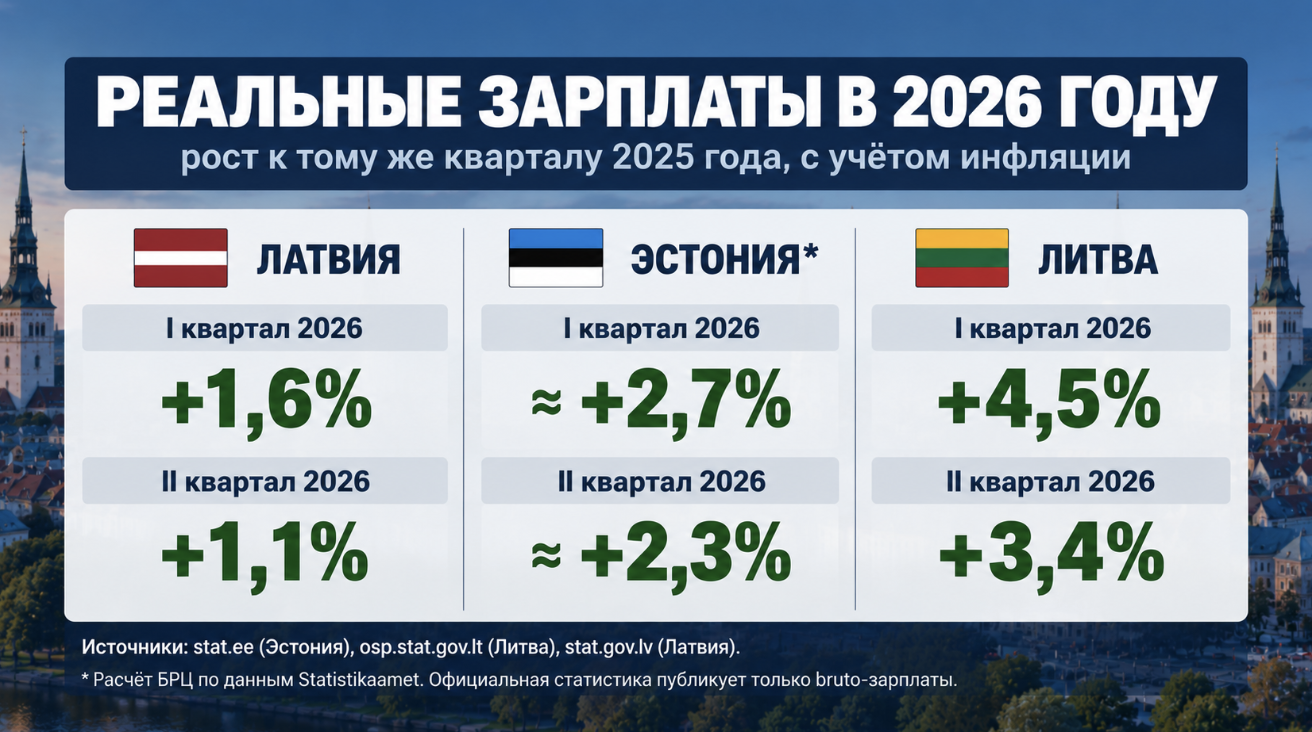
Year-over-year growth in real wages in Q1 and Q2 2026: Latvia — 1.6% and 1.1%; Estonia — approximately 2.7% and 2.3%; Lithuania — 4.5% and 3.4%. Data for Estonia were calculated by the BIC.
Hryharchuk’s claims about the continued acceleration of the Belarusian economy are also not supported by the data. Conversely, by the end of August 2026, Belarus's GDP growth rate had slowed down.
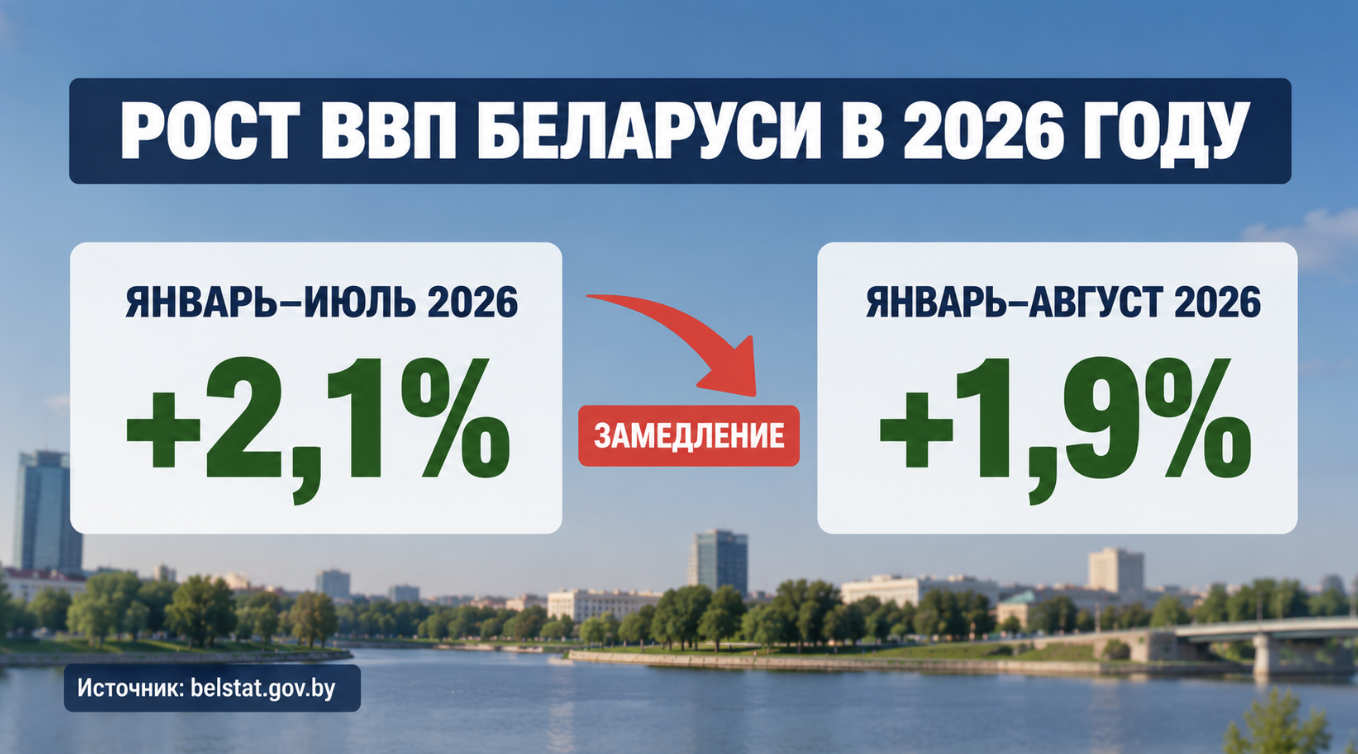
Belarus’s GDP growth slowed in 2026, from 2.1% in January–July to 1.9% in January–August, according to Belstat.
Furthermore, Lithuania's and Latvia's economies grew faster than Belarus's in 2025. In the first half of 2026, all three Baltic states outpaced Belarus in GDP growth.
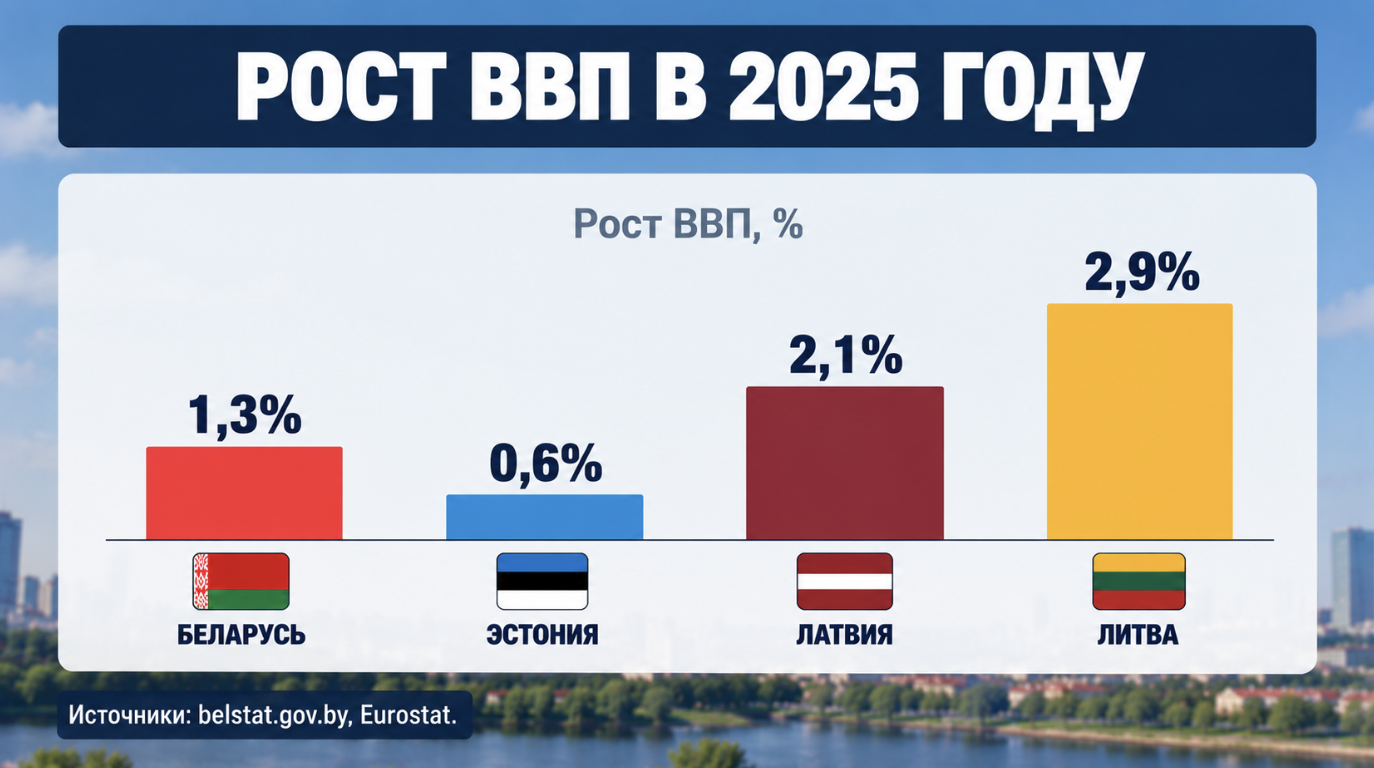
Comparison of GDP growth in 2025: Belarus — 1.3%, Estonia — 0.6%, Latvia — 2.1%, and Lithuania — 2.9%. Sources: Belstat and Eurostat.
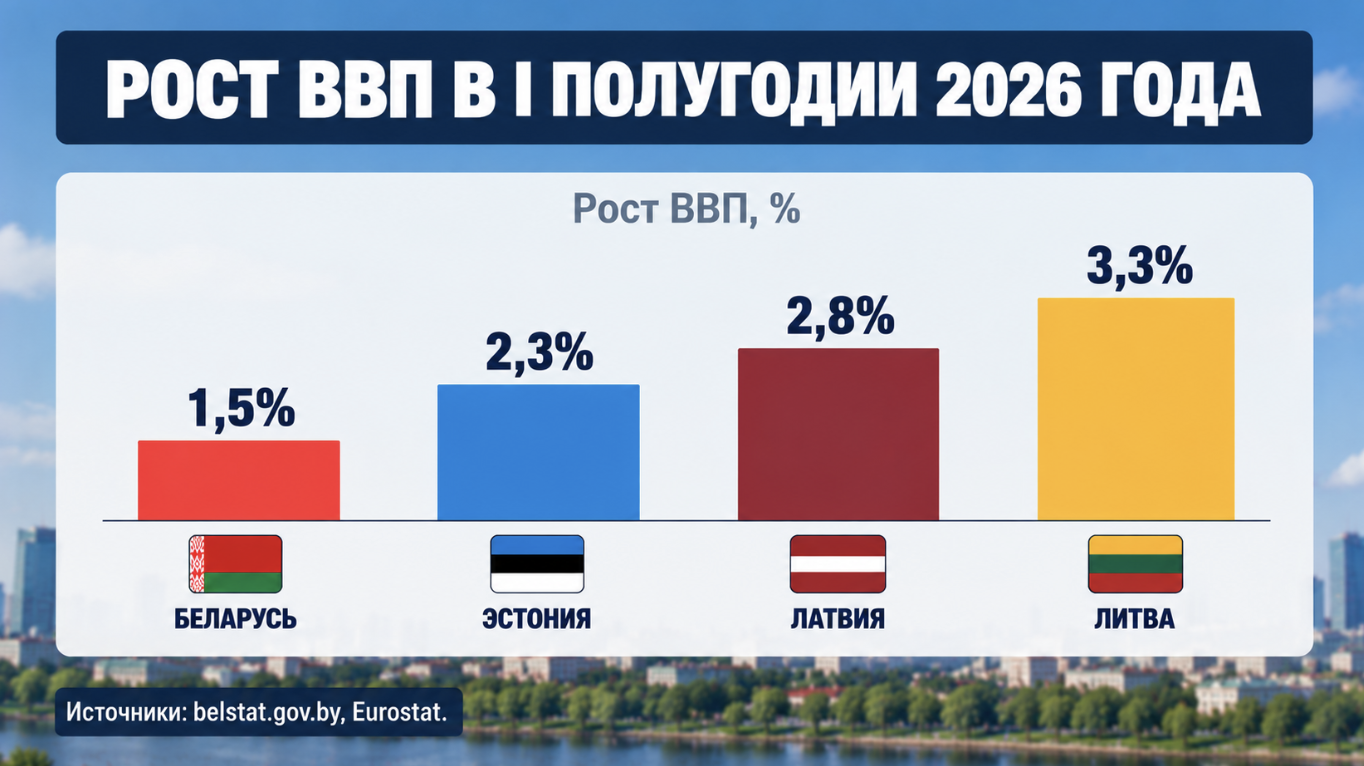
Comparison of GDP growth in the first half of 2026: Belarus — 1.5%, Estonia — 2.3%, Latvia — 2.8%, and Lithuania — 3.3%. Sources: Belstat and Eurostat.
*The term “Pribaltika” came into widespread use during the Soviet era. Since Lithuania, Latvia, and Estonia regained their independence, the term is no longer used in official terminology. Its use can be compared to using the name “Belorussia” instead of “Belarus.” While “Belorussia” is still used in Russian, it does not correspond to the country’s official name and may be perceived as outdated. The term “Pribaltika” is only used in direct quotes in this article. The editorial team uses the term “Baltic States” throughout the rest of the text.