

Context: According to a report by the Robert Koch Institute, approximately 15,800 heat-related deaths were recorded in Germany in 2026 — the highest figure in the past ten years. The heat also affected the economy. Because rivers have become shallower, ships cannot be fully loaded. This means that carriers have to make more trips, which increases shipping costs. According to forecasts, this could bring Germany’s nascent economic growth to nearly zero by year’s end.
On August 18, 2026, the 24 Chasa news program on CTV reported that labor productivity in Germany was nearly seven times lower than it had been 30 years ago:
“Labor productivity in Germany has fallen by nearly seven times over more than30 years, which is one of the worst figures since the country’s reunification. Experts warn that the current growth rate is insufficient to maintain the standard of living, particularly given the shrinking population. To compensate for the labor shortage, productivity growth rates must increase by more than five times.”
In fact, labor productivity in Germany has increased over the past 30 years, not declined. According to data from the German Federal Statistical Office, it increased by 35.4% between 1995 and 2025.
It is the rate of labor productivity growth that fell nearly sevenfold, not the productivity itself. Productivity increased by about 2% per year in the early 1990s, whereas it has grown by only about 0.3% annually over the past six years. Meanwhile, Germany’s labor productivity remains among the highest in the world. In 2025, the country produced 80.50 international dollars worth of output for every hour worked. It ranked 13th or 14th in the world.
For comparison, labor productivity stood at $53.6 per hour in Lithuania, $48.8 in Poland, $45.3 in Latvia, $43.2 in Russia, and $31.5 in Belarus. Thus, Belarus’s figure was nearly three times lower than Germany’s.
Regarding the decline in Germany’s population mentioned on CTV, it decreased by approximately 110,000 people, or 0.1%, in 2025. However, the trend is different over a longer period. Over the past ten years, the country’s population has grown by more than one million people. During the same period, Belarus showed the opposite trend: its population declined by 440,000 people over ten years.
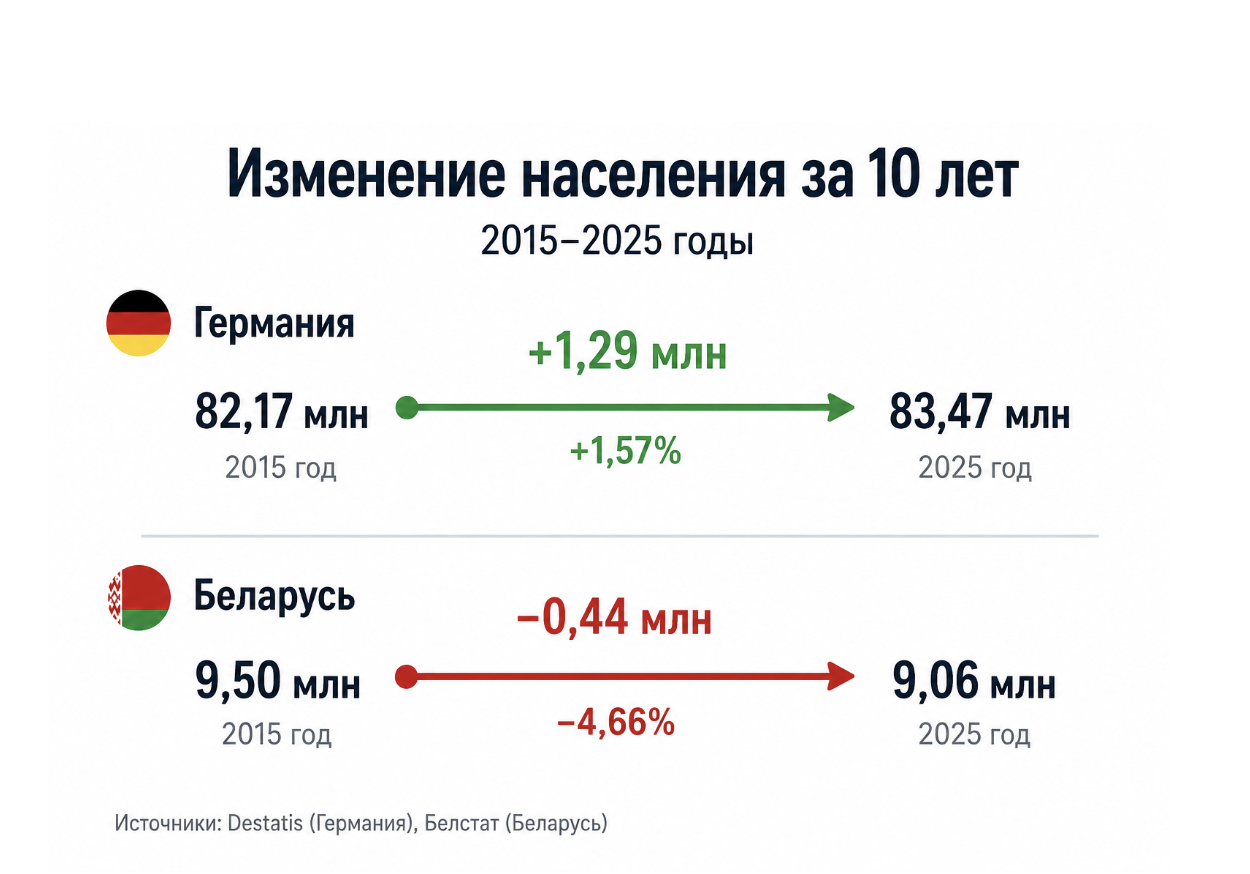
Source: Infographic by BIC